
Newfoundland Molasses Raisin Bread
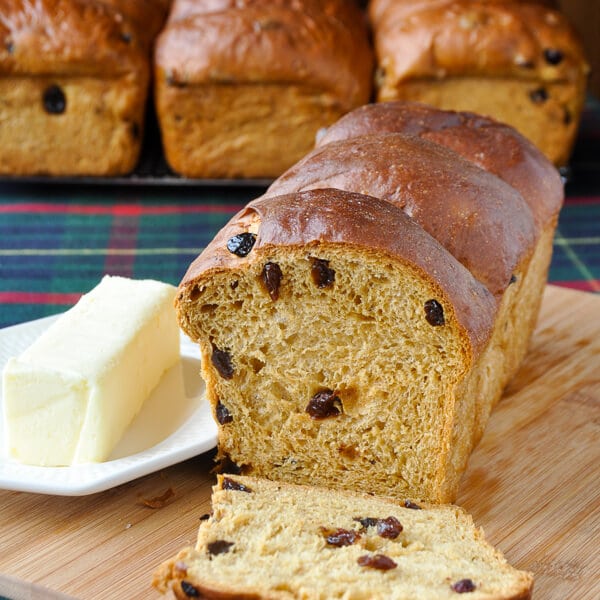
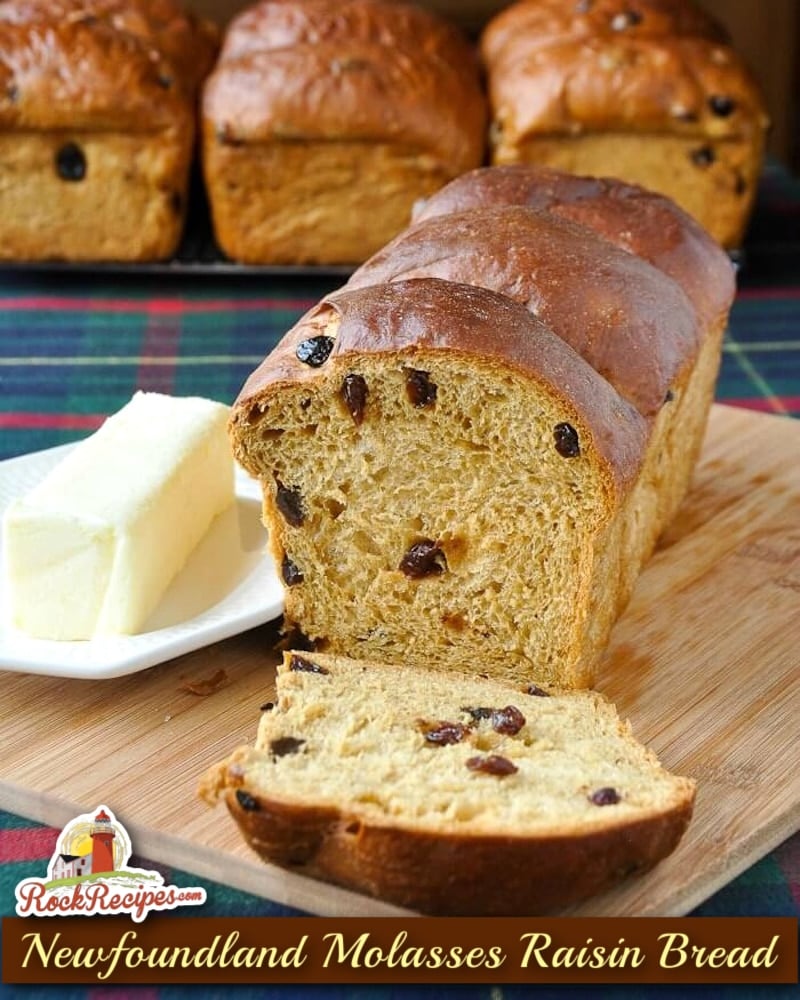
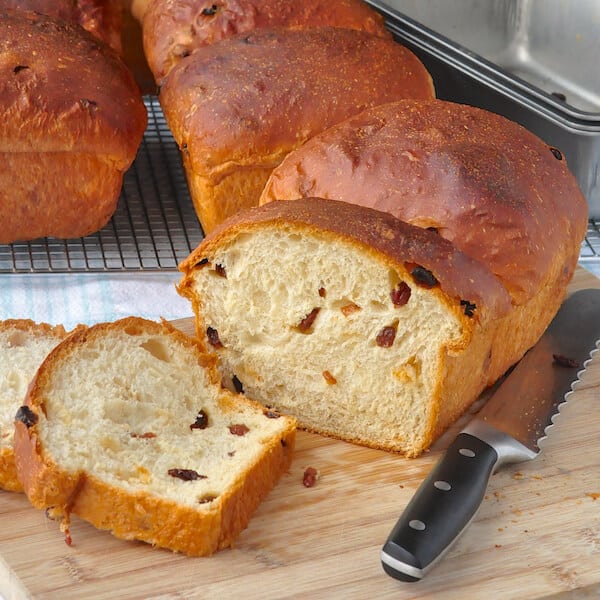
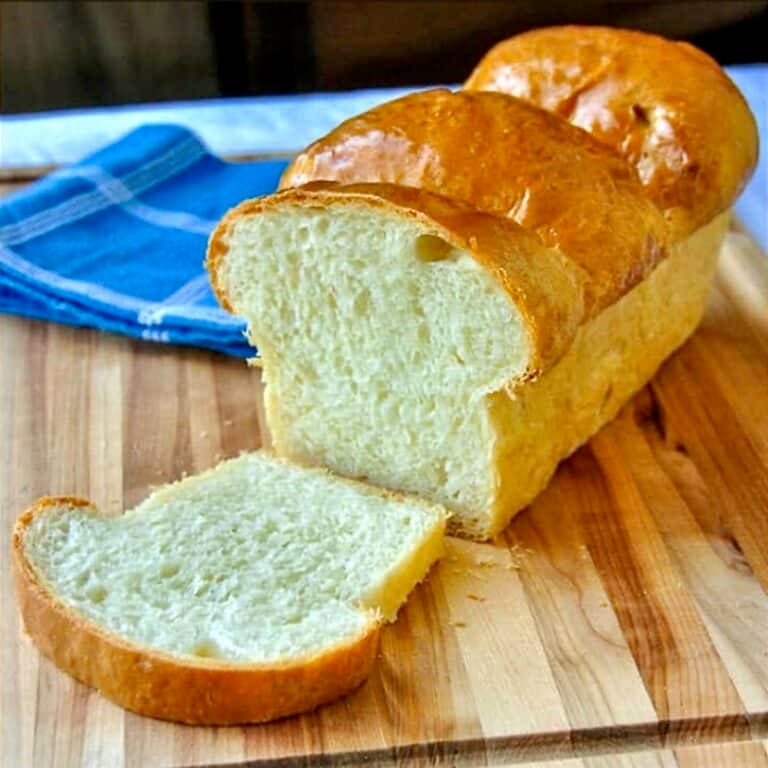
Newfoundland Molasses Raisin Bread. A classic Newfoundland recipe that everyone's Mom or Nan made back in the day. It's often enjoyed at the Holidays and is a favourite for morning toast with gobs of melting butter.
Originally published on December 22, 2008.
In the last few remaining baking days leading up to Christmas, I like to make this incredibly popular Newfoundland Molasses Raisin Bread commonly referred to in this province as "Lassie Raisin Bread".

This is another of those iconic Newfoundland recipes that every native Newfoundlander's mother or grandmother used to make and hopefully still does.
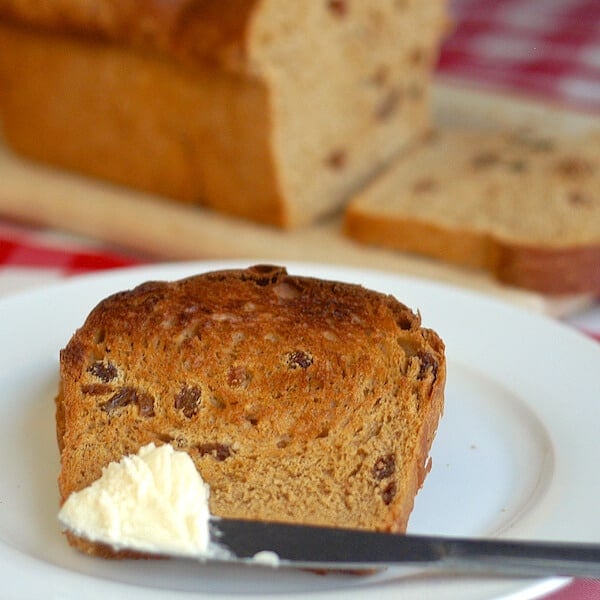
This bread is fantastic warm, straight out of the oven and makes the absolute best toast ever!

Molasses raisin toast is a bit of a Christmas morning tradition in our house. I normally make several loaves for the freezer and a few extra loaves for a couple of lucky gift recipients.
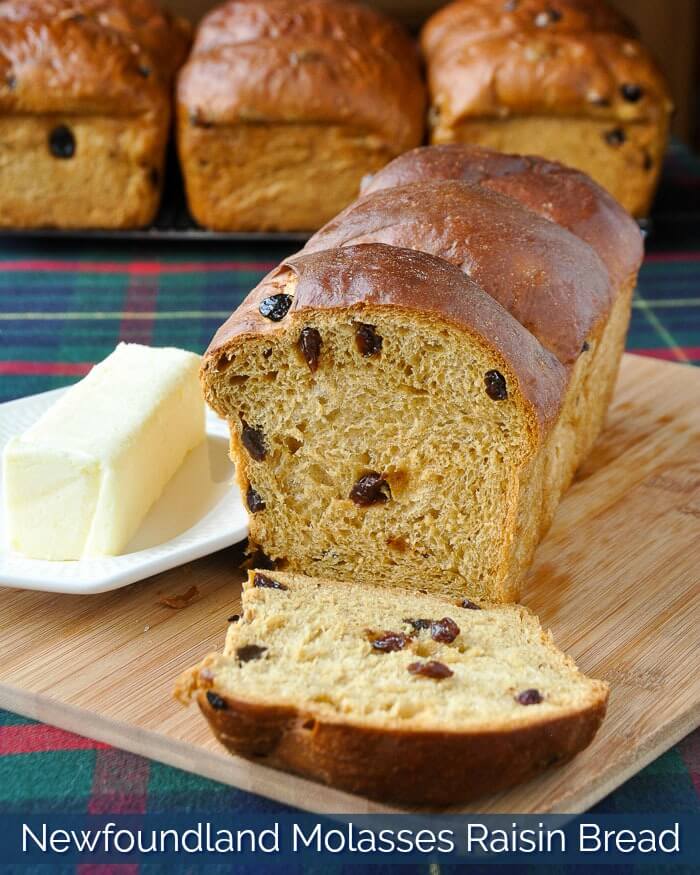
If you've never done it before, be sure to hold back a little of the dough for "Lassie Raisin Toutons" which make a fantastic brunch addition too.
Fry them at a little lower heat than you do regular toutons though as the added sugar in this dough browns and burns more easily.
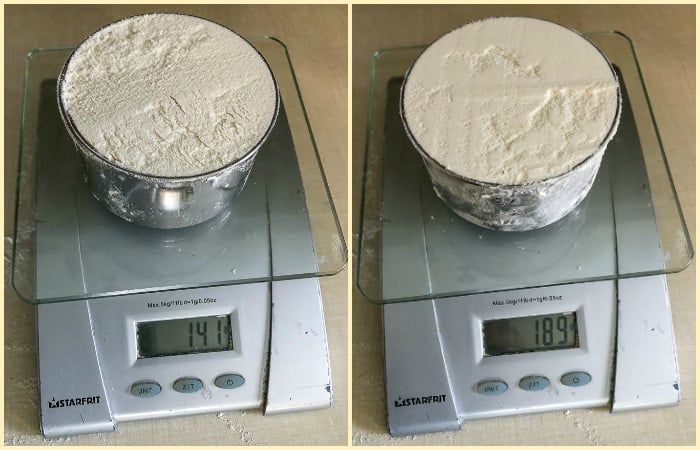
Measuring flour correctly.
It is easy to over measure flour for any recipe by as much as 30% or more as you can see in the photo below. Both are one cup of flour but one weighs much more. Read more on how to avoid this common baking pitfall in our post on How to Measure Flour Correctly.
Looking for more Newfoundland-inspired recipes?
Our province has lots of great food to offer. Be sure to check out this collection of some of our Most Popular Newfoundland recipes.
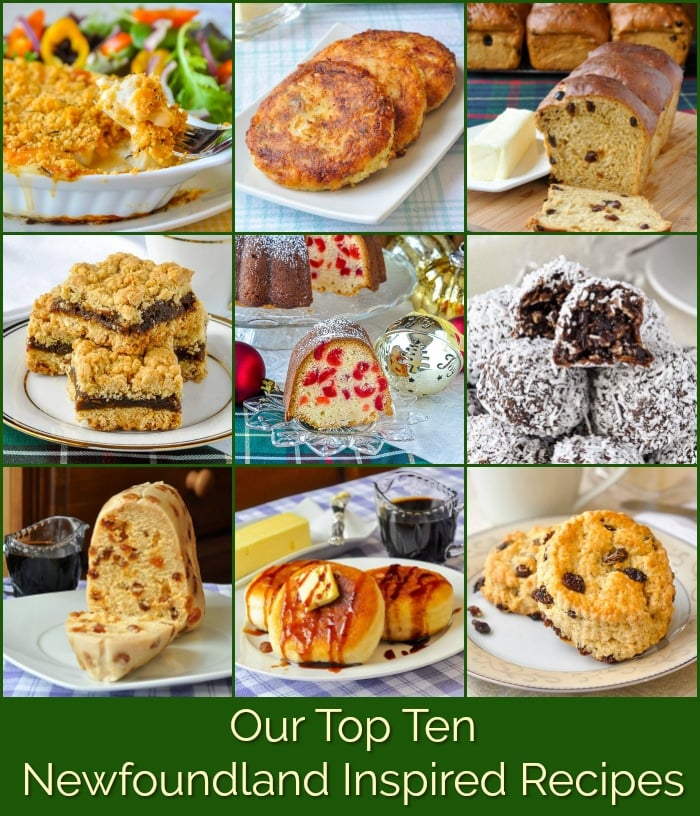
Like this Newfoundland Molasses Raisin Bread recipe?
You'll find many more traditional and Newfoundland inspired recipes in our Newfoundland section.
It's easy to keep up with the latest home style cooking & baking ideas from Rock Recipes. Be sure to follow Rock Recipes Facebook Page and follow us on Instagram.
Plus you'll see daily recipe suggestions from decadent desserts to quick delicious weekday meals too.
You can also sign up for our FREE newsletter to know immediately when we add new recipes. You'll also get weekly suggestions for great family friendly meals and desserts too!

Rock Recipes a participant in the Amazon Services LLC Associates Program, an affiliate advertising program designed to provide a means for us to earn fees by linking to Amazon.com and affiliated sites. Our product recommendations are almost exclusively for those we currently use or have used in the past.
Newfoundland Molasses Raisin Bread
A classic Newfoundland recipe that everyone's Mom or Nan made back in the day. It's often enjoyed at the Holidays and is a favourite for morning toast with gobs of melting butter.
Ingredients
- 1 cup lukewarm water
- 2 tablespoon white sugar
- 2 8 gram envelopes dry yeast (or 4 teaspoon total)
- 1 teaspoon salt
- 8 cups all purpose flour, approximately
- 1 ½ cups lukewarm milk
- 1 cup molasses
- ¾ cup melted butter
- 2 beaten eggs
- 3 cups raisins
Instructions
- In a small bowl, stir the sugar into the lukewarm water and then sprinkle the yeast over the top. Let stand without stirring for 10 minutes.
- In a large mixing bowl or the bowl of an electric mixer that has a dough hook, stir together 3 cups of the flour along with the salt. When the yeast is ready, stir it add it to the flour and salt along with the butter, molasses, warm milk and beaten eggs.
- Using a wooden spoon or the regular paddle of your electric mixer, mix slowly for 4-5 minutes until the mixture is smooth with no lumps. If using an electric mixer, switch to the dough hook at this point and begin to slowly incorporate the remaining flour. You may need to use a little more or less flour than the recipe details to bring your dough to a proper consistency that is not too sticky. This is not unusual.
- If not using an electric mixer, keep mixing in the flour gradually until a soft dough forms that leaves the sides of the bowl.
- Add the raisins at this point and continue to knead until the raisins are evenly distributed in the dough.
- Turn the dough out onto a flour-dusted counter top or breadboard to knead. Knead the dough for an additional 5-10 minutes by hand.
Proofing the dough
- Place the dough in a large bowl cover the dough with a damp tea towel. Leave it to rest and rise for two hours. Punch the dough down and knead it for a few minutes by hand before letting it rest for another 10 minutes.
- Grease 4 medium loaf pans. 9 x 5 inches at the top or similar dimensions. Divide the dough into 12 equal portions. Form each portion into a ball. I use a kitchen scale for this purpose, taking the total weight of the dough and them dividing by 12.
- Place 3 balls of dough in each prepared loaf pan. Cover with a clean tea towel and allow the dough to rise until it is about 2 inches above the rim of the pan, about 2-3 hours depending on room temperature. Molasses bread generally takes quite a bit longer to rise/proof than white bread.
- Bake at 350 degrees F for 40-50 minutes depending on the size of the pans that you are using. The top and bottom crust should have good colour.
- When baked, turn the loaves out onto a wire rack to cool. Brush the tops with melted butter if desired to soften the top crust.
Notes
For those who are familiar with making your own bread, you should be aware that the rising time for this bread is generally quite a bit longer than other breads. The times quoted here are just guidelines and will vary considerably depending on room temperature. The most important rising is in the pans; just make sure that the dough rises at least a couple of inches above the bread pans before baking the bread.
Total time noted in the recipe does not include rising times. Allow severl hours in addition.
Recommended Products
Rock Recipes a participant in the Amazon Services LLC Associates Program, an affiliate advertising program designed to provide a means for us to earn fees by linking to Amazon.com and affiliated sites. Our product recommendations are almost exclusively for those we currently use or have used in the past.
Would you like to save this recipe?
Send this recipe to my email.

great bread before i put in the raisins i scolded the raisins a bit to plump them up i also warmed the molasses then lots and lots of rains i used all purpose flour can you also use the flour for cakes
I made the bread twice. First time it didn't rise at all. Next day I made it again, this time it did rise but took about 5 hours. I also found it to be much darker than my grandmother's. I used cooking molasses. I went to Crosby's molasses website and read about the different types of molasses. I think I should have used the fancy molasses as it is not as dark as the cooking. Just wondering which of the two do you use in the recipe. The picture looks exactly like my grandmother's. Thank you.
It can take a long time to rise for sure. I usually use the fancy molasses.
Can you make this without the raisins?
yes.
What's the best yeast to use in this recipe or can you just use more yeast to get is rise better?
I use regular bread yeast. Molasses brad always takes twice as long to rise I find.
Can you increase the yeast or use a different kind of yeast to make it rise better?
Yeast is more about time than amount. I do find molasses bread takes much longer to rise. Adding more yeast could affect the taste.
Can I use cooking molasses instead of fancy molasses to make raisin bread. I made baked beans once with cooking molasses and found it bitter but it has to be good for something...
I wouldn't. It could also impede yeast growth.
I am at the second rise stage,,, my bread looks amazing. I did use the cooking molasses but it is rising perfect and I love the dark colour it has looks sooo yummy
I made this recipe. My husband who ordinarily does not like raisins pronounced it absolutely delicious and I will make it periodically.. I am glad you gave the info regarding it taking longer to rise. I also made it by hand, ran out of all purpose flour and added whole wheat . Next time I will use my Kitchen Aid to see if it makes a difference. In the combining. of ingredients. Lydia Ross
How would I use a bread and roll mix for this.
Appreciate any tips or ideas. Thanks
I don't use bread and roll mix so I have no experience with that. They are all common ingredients, why not try the recipe as is?
I made this recipe this morning. Dough is in the pans now rising,,,,slowwwwwwly.......lol! I found the dough very dense and heavy. Is that normal? Ive never made molasses raisin bread before....cant wait to try it once its baked. Im trying to be very patient....haha!
Well the receipe got my taste buds going so I am in the process of waiting for it to rise for the first time. I have been baking bread for years but this one is my first molasses raisin bread. Can't wait well maybe
Thanks
I made this bread yesterday...my first time ever to make raisin bread... and even tho it took longer to rise, it was so delicious. My husband raved over it. I have one question, tho.... it seems a bit crumbly, not as chewy or stretchy as it should be. The only change I made was that I used bread flour instead of all purpose... would that cause a crumbly texture? Love your recipes 🙂
You may have added a little too much flour while kneading or you may not have kneaded enough. You'll get better with practice I'm sure. Glad your husband liked it though.
The rising issue may be caused by the wording of the recipe. If you're a person who uses 8g yeast packages then there's no problem but if, like I do, you buy your yeast in jars there is an error. There are 2 1/4 tsps in every package of yeast so in this recipe you will need 4 1/2 tsps. Being from Cape Breton myself, I do love using molasses in bread and I've got this recipe rising in the oven right now.
Hi Wilda, thanks for your comment. I was just reading and re-reading the recipe and trying to figure out if it meant 2 packages of yeast or 2 teaspoons because they're different amounts! I'm also a Cape Bretoner and making this bread for my husband's birthday. Take care!
I've updated the recipe to be more clear.
Hi Barry, thanks so much for the recipe. I was a bit confused about the yeast measurements. Does the recipe call for 2 pkgs of dry yeast or 2 tsp?
I've updated it to reflect that 2 8g packages of yeast is equal to 4 tsp.
Hi Barry, love this recipe make it all the time.. but.. it is actually 4 1/2 tsp of yeast we need here. As each 8g package is equal to 2 1/4 teaspoons.
I only use loose yeast not package, and I always use 4 1/2 teaspoons for this recipe.
Tks Donna
I mistakingly bought the quick rise yeast and would like to use it. How can I adapt it for this recipe?
I'd just use it as directed. Give it plenty of time to rise.
Can you use bread and roll mix ?
I don't use it, so I've no idea how to adapt the recipe to that.