
How to Bake the Perfect Cheesecake Every Time or "Just a Vanilla Cheesecake"
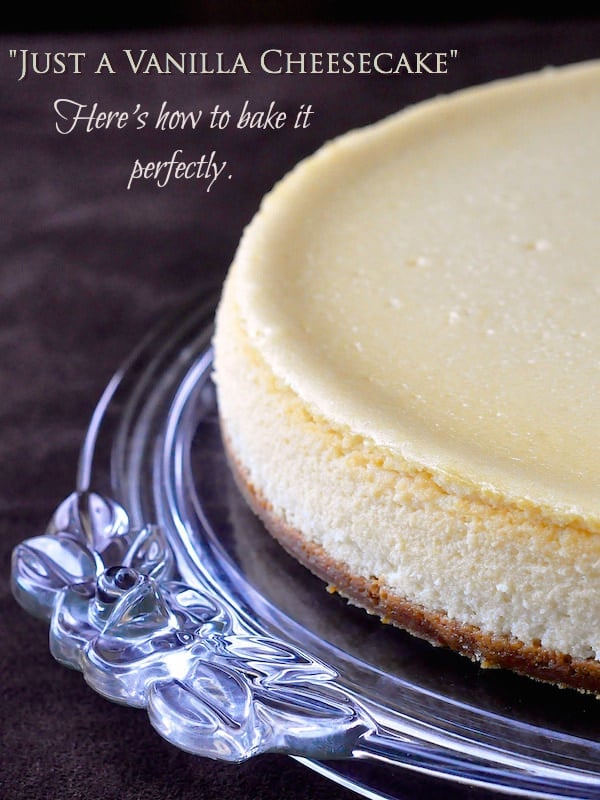
Learning how to bake the perfect cheesecake is all about quality ingredients, an uncomplicated recipe and mastering the simple method.
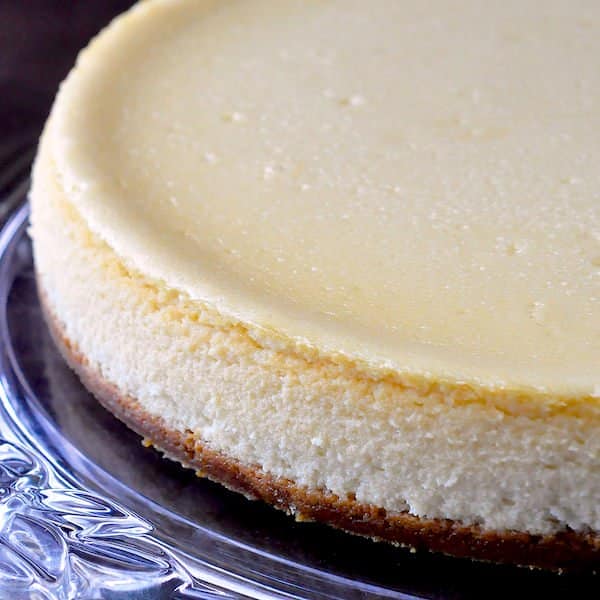
I recently had a conversation with one of our readers who was so nervous about baking a cheesecake for her husband's birthday. She had previously encountered a couple of cheesecake disasters.
Understandably, she was not relishing the thought of ruining the centrepiece of the birthday celebration. I convinced her to do a practice run with a "just a vanilla cheesecake" to get a feel for the process of baking the perfect cheesecake.
Following this recipe and instructions she was delighted to perfectly bake both the practice cheesecake and the second as hubby's birthday cake.
The advantage of learning with "just a vanilla cheesecake" is that it is very simple to prepare with uncomplicated ingredients. Also, you get a good feel for the proper consistency of a cheesecake batter.
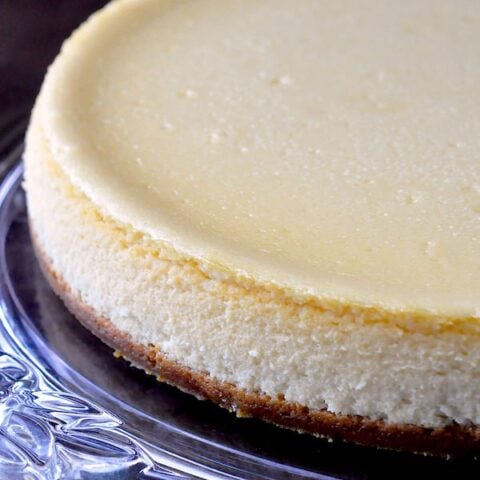
It is also relatively easy to tell when a vanilla cheesecake is done. If the top of this cheesecake begins to brown at all, in all likelihood it is fully baked.
Although as the recipe states, it need not brown at all to be fully baked. I give the pan a little shake to test how much it wobbles after about an hour.
It is best to treat a cheesecake like a large baked custard which it really is. Residual heat will take care of any slightly wobbly centre even after it comes out of the oven.
In my opinion, baking the perfect cheesecake requires the use of a bain marie during baking.
A bain marie is simply a water bath that buffers the direct heat from the sides and bottom of the baking pan. This helps the cheesecake bake more evenly.
I bake my cheesecakes in a 9 inch spring form pan that has the bottom and sides wrapped in multiple layers of wide heavy duty aluminum foil. Therefore it forms a sort of boat that the cheesecake pan sits in.
The roll of aluminum foil that I use is about 16 inches wide. I use at least 4 layers of foil to make sure that no water leaks in and ruins the crust of my cheesecake.
The aluminum foil wrapped pan is then placed inside a larger baking pan; I use a 12 inch cake pan. Boiling water is then poured into the larger pan filling it from ½ to ⅔ of the way to the top.
I find it best to pour the boiling water into the pan after it is placed on the rack in the oven. Then, you are less likely to splash water onto the cheesecake or inside the aluminum foil.
I reuse the aluminum foil for several future cheesecakes, adding a couple of layers to it each time just to be safe.
I still recommend that you use the aluminum foil wrap around the cheesecake pan. The aluminum foil still offers a good buffer to the heat. High heat and baking too quickly is the main reason that a cheesecake becomes dense and not creamy.
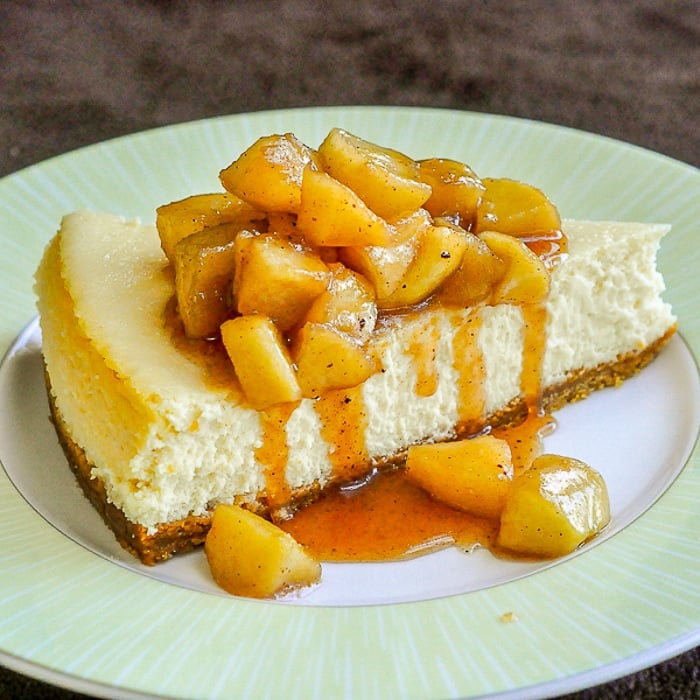
The recipe for the Maple Apple Topping on the cheesecake above can be found here: Maple Apple Cheesecake.
Like this Cheesecake recipe?
You'll find hundreds of other sweet ideas in our Cakes & Pies Category and even more in our Desserts Category.
It's easy to keep up with the latest home style cooking & baking ideas from Rock Recipes. Be sure to follow Rock Recipes Facebook Page and follow us on Instagram. Plus you'll see daily recipe suggestions from decadent desserts to quick delicious weekday meals too.
You can also sign up for our FREE newsletter to know immediately when we add new recipes. You'll also get weekly suggestions for great family friendly meals and desserts too!

Rock Recipes a participant in the Amazon Services LLC Associates Program, an affiliate advertising program designed to provide a means for us to earn fees by linking to Amazon.com and affiliated sites. Our product recommendations are almost exclusively for those we currently use or have used in the past.
How to Bake the Perfect Cheesecake Every Time or "Just a Vanilla Cheesecake"
How to Bake the Perfect Cheesecake Every Time or "Just a Vanilla Cheesecake" - Learning how to bake the perfect cheesecake is all about quality ingredients, an uncomplicated recipe and mastering the simple method.
Ingredients
For the cookie crumb crust
- 1⅓ cups graham cracker crumbs
- 3 tablespoon sugar
- ⅓ cup melted butter
For the cheesecake batter
- 3 eight ounce packages ounces cream cheese, (3 cups)
- 1 cup sugar
- 3 eggs
- 3 teaspoon vanilla extract, (or, even better, the seeds from one large vanilla pod)
- 1 cup whipping cream
Instructions
To prepare the cookie crumb crust
- In a small bowl combine the graham cracker crumbs, sugar and melted butter.
- Press the crumb mixture into the bottom of a lightly greased or parchment lined 9 inch spring form pan. (Grease bottom only!) Parchment paper is ideal here because it makes it very easy to release the cheesecake from the bottom of the pan.
To prepare the cheesecake batter
- Cream together the cream cheese and sugar for 2 to 3 minutes until well combined.
- Add the eggs, one at a time, beating well after each addition.
- Beat in the vanilla extract (or vanilla pod seeds. If using a vanilla pod, scrape all the seeds out and stir them very well into the whipping cream in the next step. This will help to break up the sticky vanilla pod paste and make sure the tint black seeds are evenly distributed throughout the cheesecake.)
- Finally blend in the whipping cream well until the batter is very smooth. Using a rubber bowl scraper/spatula, scrape the bottom and the sides of the bowl as well as the electric beaters/paddle and give the batter a final beating for 1 minute on a higher speed. This final step ensures that there are no lumps in the batter and introduces a little air into the cheesecake to make it lighter.
- Pour over the prepared base and bake in a bain marie at 300 degrees F for 60-70 minutes. (Oven temperatures will vary slightly. Mine takes the full 70 minutes and you can go to 75 if you feel you need to.)
- Don't be an compulsive oven door opener! Don't open it at all in the first hour.
- The cheesecake does not have to brown at all in order to be fully baked; the surface of the cheesecake should lose any shine when the cake is properly baked. It can still be slightly wobbly just at the center at this point.
- Remove the cake from the oven and run a sharp knife completely around the edge of the pan. This will allow for the cheesecake to shrink as it cools and hopefully not crack (Allow the cheesecake to cool thoroughly on a wire rack at room temperature. (NOT in the fridge). Refrigerate after fully cooled.
Notes
In my opinion, baking the perfect cheesecake requires the use of a bain marie during baking. A bain marie is simply a water bath that buffers the direct heat from the sides and bottom of the baking pan to more evenly bake the cheesecake from the sides to the center. I bake my cheesecakes in a 9 inch spring form pan that has the bottom and sides wrapped in multiple layers of wide heavy duty aluminum foil which forms a sort of boat that the cheesecake pan sits in. The roll of aluminum foil that I use is about 16 inches wide. I use at least 4 layers of foil to make sure that no water leaks in and ruins the crust of my cheesecake. The aluminum foil wrapped pan is then placed inside a larger baking pan; I use a 12 inch cake pan. Boiling water is then poured into the larger pan filling it from ½ to ⅔ of the way to the top.I find it best to pour the boiling water into the pan after it is placed on the rack in the oven as you are less likely to splash water onto the cheesecake or inside the aluminum foil. I reuse the aluminum foil for several future cheesecakes, adding a couple of layers to it each time just to be safe. EVEN IF YOU CHOOSE NOT USE A BAIN MARIE still use the aluminum foil wrap around the cheesecake pan. The aluminum foil still offers a good buffer to the heat. High heat and baking too quickly is the main reason that a cheesecake becomes dense and not creamy.
Nutrition Information
Yield
12Serving Size
1/12Amount Per Serving Calories 258Total Fat 15gSaturated Fat 9gTrans Fat 0gUnsaturated Fat 5gCholesterol 85mgSodium 114mgCarbohydrates 28gFiber 0gSugar 23gProtein 3g
The nutritional information provided is automatically calculated by third party software and is meant as a guideline only. Exact accuracy is not guaranteed. For recipes where all ingredients may not be used entirely, such as those with coatings on meats, or with sauces or dressings for example, calorie & nutritional values per serving will likely be somewhat lower than indicated.
Would you like to save this recipe?
Send this recipe to my email.
I am planning to top this with a strawberry glaze. I was planning to do this as it cools to try and keep the glaze on top. Any suggestions or helpful hints on this?
Hard to answer that question without knowing what you mean by Strawberry glaze and how you make that.
What is the best way to lift cheesecake off the bottom of springpan?
I always line the bottom of the pan with parchment paper for easy release.
Is Nutriwhip ok for this recipe??
I really don't think so Glady. Nutriwhip is basically oil, not cream. I predict real problems using it.
You have done a lovely job with your cheesecake. I am a pastry chef and instructor, and I love seeing others show love through their food..
Very well done. And I love the simple recipe. You see so many recipes that have tons of ingredients that are unnecessary when you want a "simple vanilla cheesecake" Bravo!
Thanks Kelley. I've made a lot of different recipes over the years and this is the way I've grown to prefer them. When I go into bakeries and see really brown cheesecakes, my heart sinks, I just find them dense and stodgy. But then again that's what some people like. To each his own.
Would it make a difference if I baked this in a glass pie pan rather than metal?
Do you hope to remove it from the pan? Are you using the bain marie method? The size might be the issue here.
Can I make this recipe in a glass pie pan?
That would have to be a very large deep dish pan.
I made thusnrecipe and used glass pans...it made 2 cheesecakes 🙂 they are still in the oven, can't wait to taste them!
Like Pie plates you mean? Interesting idea.
I followed your recipe exactly, and it was the BEST cheesecake I have ever made! Everyone enjoyed it and wants your recipe. I also made a blueberry compote as a topping. Thank you so much for sharing.
Thanks for sharing your success! So happy it turned out well.
this the best cheesecake recipe I have ever tasted! I have made it several times. It's the only cheesecake recipe I will make now. I was wondering if there's a way of making a berry swirl cheesecake out of this recipe?
It should be fine with berry compote just swirled through when it's in the pan. I do that with cheesecake bars sometimes.
How can you tell when it's fully cooked - given that there are eggs involved, I want to be sure that it's cooked fully. It's browned some on top but quite a bit more than "slightly" wobbly. Thank you! Smells delicious!
If it's beginning to brown, it's usually a safe bet that it's fully cooked. The residual heat does continue after it leaves the oven.
Any opinions on baking cheesecakes in a Bain Marie vs with a pan of water underneath? I prefer the latter as there's never worry about leaking (it seems that no matter how many layers of foil i use there's always leakage, however i do get cracks in my cheesecakes often.
I use several layers of heavy duty aluminum foil without a problem. I've often thought that some bakeware company should sell a set with a spring form pan and a silicone liner to go around it. Wouldn't that be ideal?
I know plenty of people who also put a couple of layers of plastic wrap before using the aluminum foil too. I've seen plastic wrap used to seal roasting pans in restaurant kitchens at low temps like this when braising large amounts of meat. They cover with aluminum foil too. Seems to work.
I would like to make this recipe on a Friday afternoon and serve on a Sunday evening. Does it keep well and any suggestions on storing?
It will be fine for 2 or 3 days when refrigerated. I use a cake container.
I used yoghurt instead of cream and loved the texture...
Full fat yogurt?
I thought incorporating air into your cheesecake batter will result in your cake rising and then falling, thus creating cracks. Once you add the eggs, you only mix until combined. Heard this from a pastry chef of Food Network years ago.
That certainly has not been my experience. Over baking is what causes cracks in my experience.
I've made a lot of cheesecakes in the past, but lost my favorite recipe. I tried this tonight and added a little lemon extract and topped with a huckleberry glaze. It was so light and smooth, such an amazing recipe. This will become the base to all of my favorite cheesecakes from now on.
Thanks!
I'm going to try your recipe... with my farm fresh chevre (goat) cheese) in lieu of store-bought cream cheese!! Thanks!!